Desert Batteries 101
Learn why Arizona’s extreme heat destroys car batteries, what happens inside them, and how to get the longest possible life from yours.
The Heat Is the Real Battery Killer
We all know the feeling of getting into a car parked outside a grocery store in July. You open the door, and a wall of heat hits you like an open oven. You blast the AC, chug your iced coffee, and pray for mercy.
But while you are sweating in the driver’s seat, your car battery is under the hood fighting a battle it can never win.
Most people think winter is the ultimate battery killer because that’s when cars refuse to start on chilly mornings. But here is the real desert truth: while winter delivers the final blow, it’s the brutal Arizona summer that actually commits the crime.
To understand why our desert home is so hostile to car batteries, we need to take a quick, painless trip inside the box.
"Winter delivers the final blow. Arizona summers commit the crime."
What's Inside Your Car Battery?
A standard automotive battery may look like a simple black box, but inside are six individual cells working together to produce the electricity needed to start your vehicle. Understanding these basic parts makes it much easier to see why Arizona’s extreme heat is so damaging.
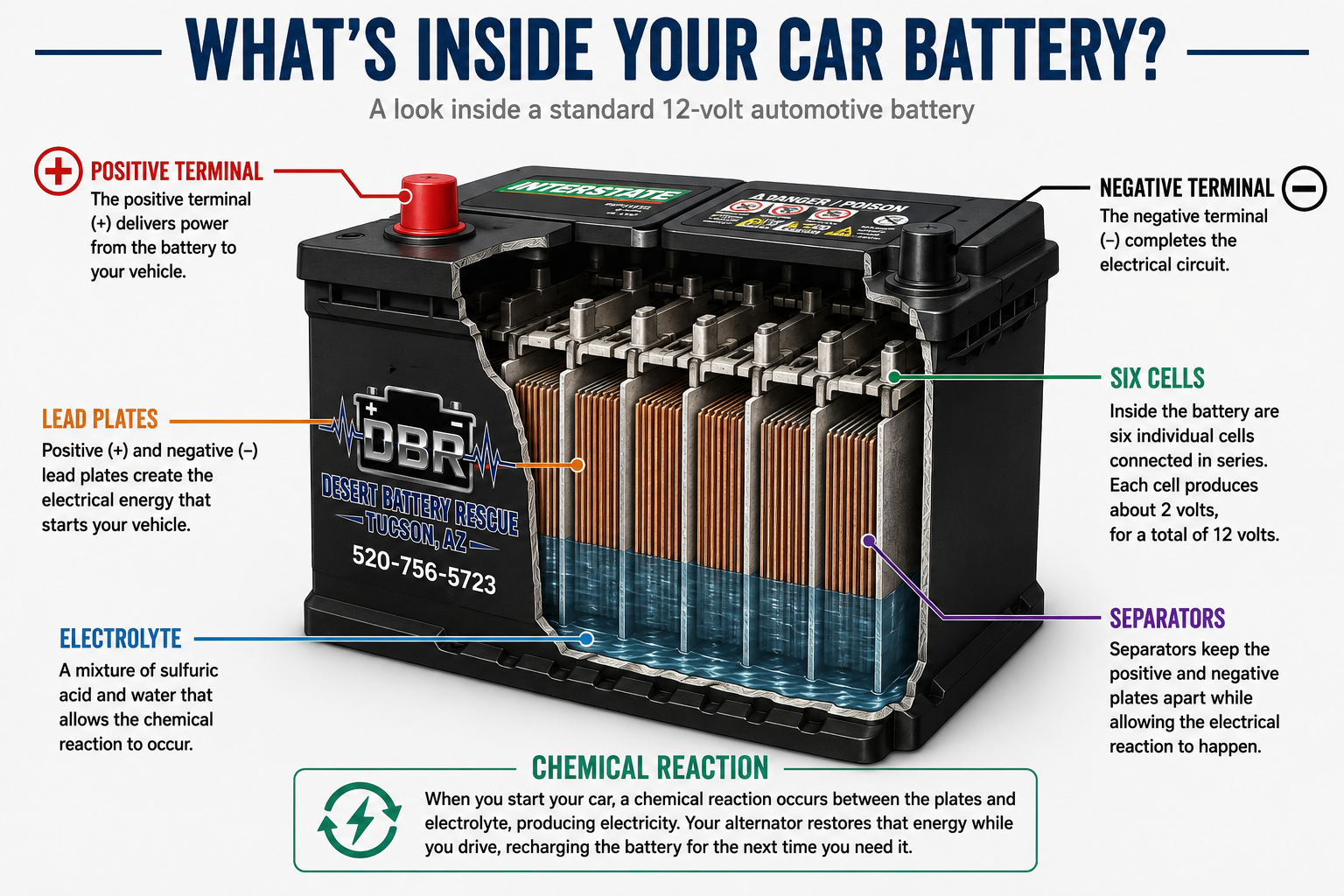
Every Part Has a Job
Every component inside your battery works together to create and store electricity. When Arizona’s extreme heat begins damaging these parts, the battery slowly loses its ability to start your vehicle reliably.
What Arizona Heat Does Inside Your Battery
Heat rarely destroys a battery overnight. Instead, it slowly damages the battery from the inside over months and years—until one day it no longer has enough power to start your vehicle.
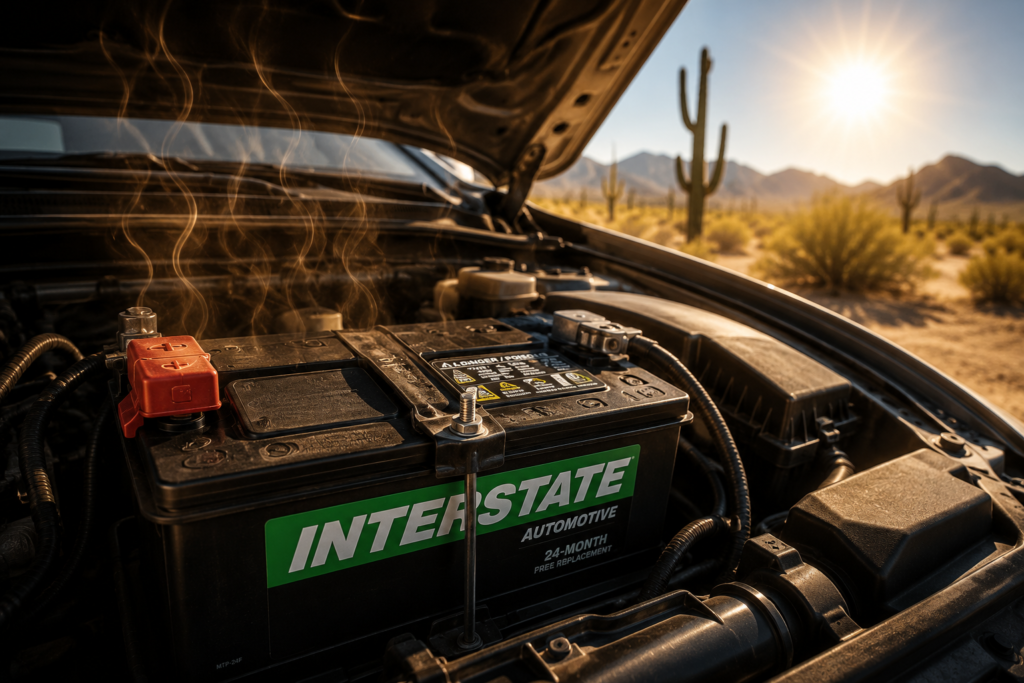
Extreme Heat
During the summer, temperatures under your hood can easily exceed 160°F. While that might not seem like a problem for a battery, heat dramatically speeds up the chemical reactions happening inside, causing the battery to age much faster than normal.
🔥 Arizona Fact
Under-hood temperatures can exceed 160°F during the summer—hot enough to dramatically accelerate battery aging, even while your vehicle is parked.
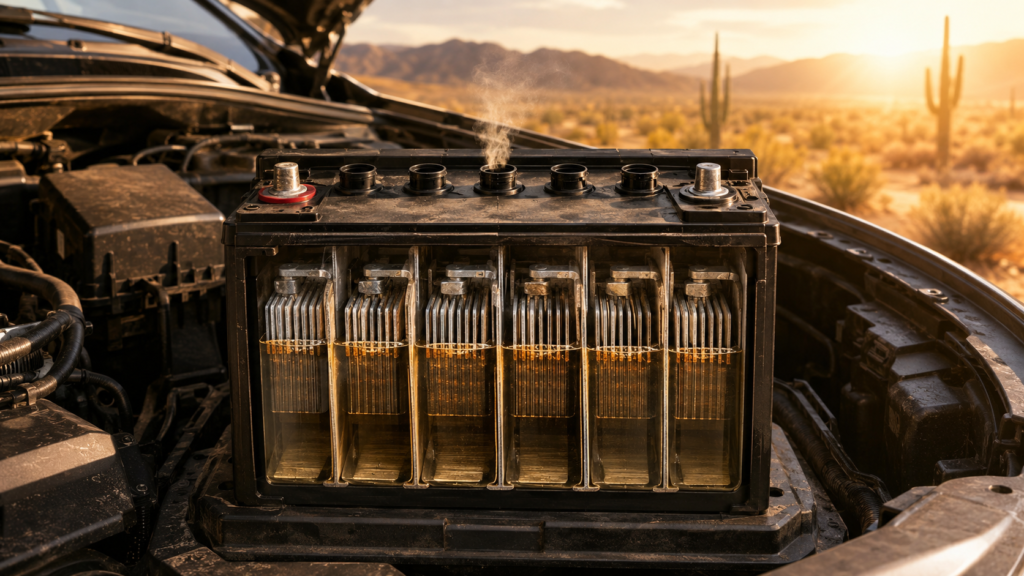
Water Starts to Disappear
Inside every battery is a mixture of water and sulfuric acid called electrolyte. Arizona’s intense heat slowly causes the water portion to evaporate. Even though the battery still works, it now has less liquid available to protect the lead plates inside.
🌵 Arizona Fact
Inside every battery is a mixture of water and sulfuric acid called electrolyte. Arizona’s intense heat slowly causes the water to evaporate, lowering the fluid level that protects the lead plates inside.
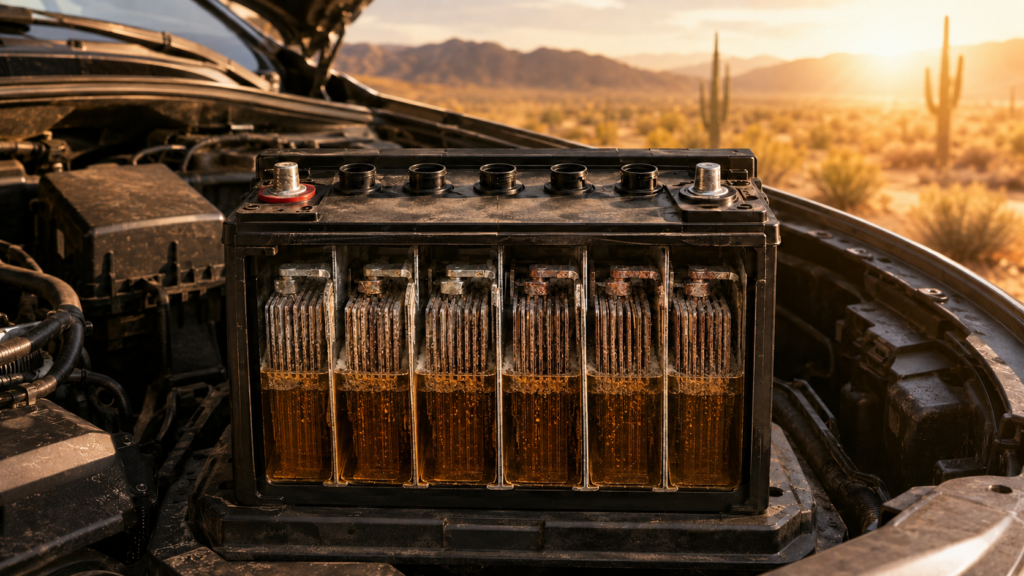
The Acid Gets Stronger
When water evaporates, the sulfuric acid doesn’t disappear with it. Instead, the remaining acid becomes stronger and more concentrated. That stronger acid begins attacking the lead plates inside the battery, slowly wearing them away.
🌵 Arizona Fact
Heat speeds up chemical reactions inside a battery. Even when your car starts normally, damage can continue building every hot day.
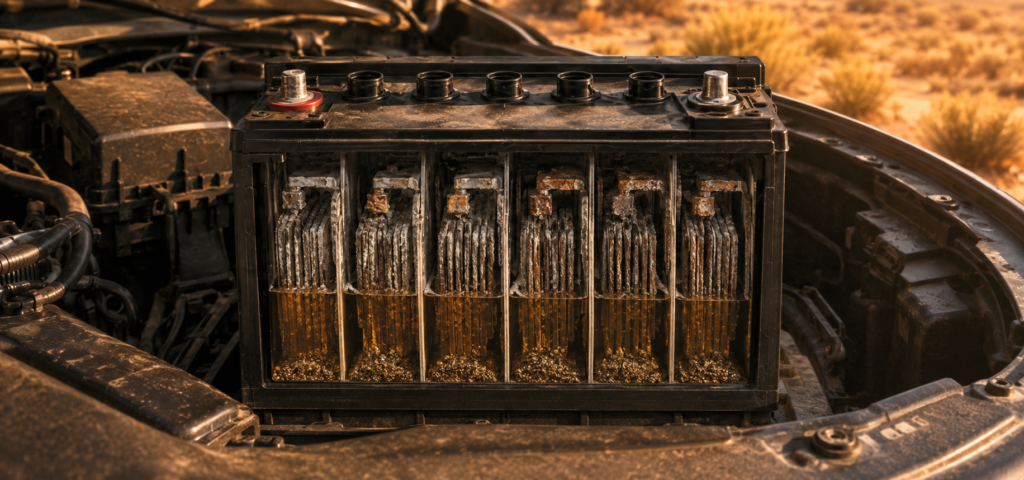
The Plates Begin to Break Down
Over time, the stronger acid corrodes the battery’s internal lead plates. Small pieces of active material begin breaking away and collecting at the bottom, leaving the battery with less material available to store and deliver power.
🌵 Arizona Fact
Once plate material breaks away, it cannot be restored. The battery permanently loses capacity—even if it can still start the vehicle today.
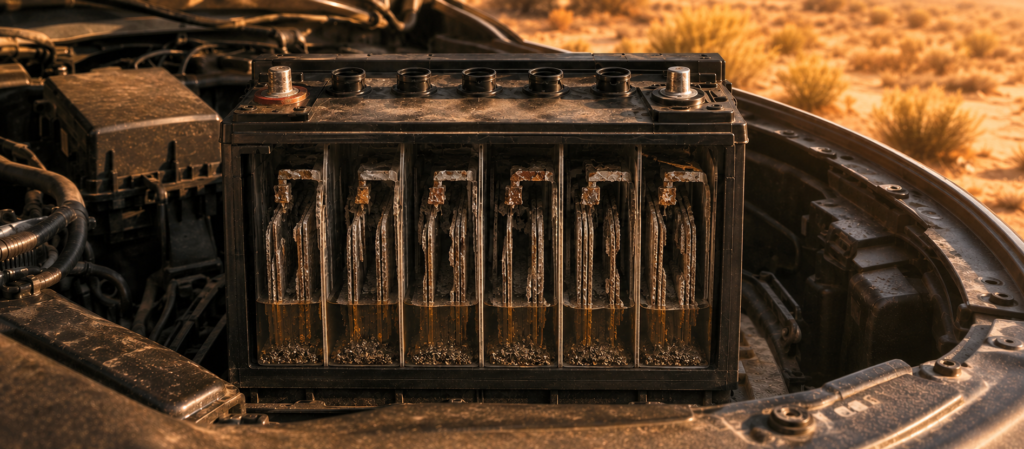
The Battery Holds Less Power
With less usable plate material, the battery can no longer store as much energy or deliver the same starting power. It may continue working for a while, but each hot day leaves it with less reserve for the next start.
🌵 Arizona Fact
A heat-damaged battery may start your car normally one day and fail the next—especially after sitting overnight or during a period of extreme heat.
What Happens When a Vehicle Sits?
Even when your vehicle is parked, the battery is still working. Modern vehicles continuously power security systems, keyless entry, onboard computers, clocks, and other electronics. In Arizona’s extreme heat, these small electrical draws combined with high temperatures can quickly weaken an aging battery.
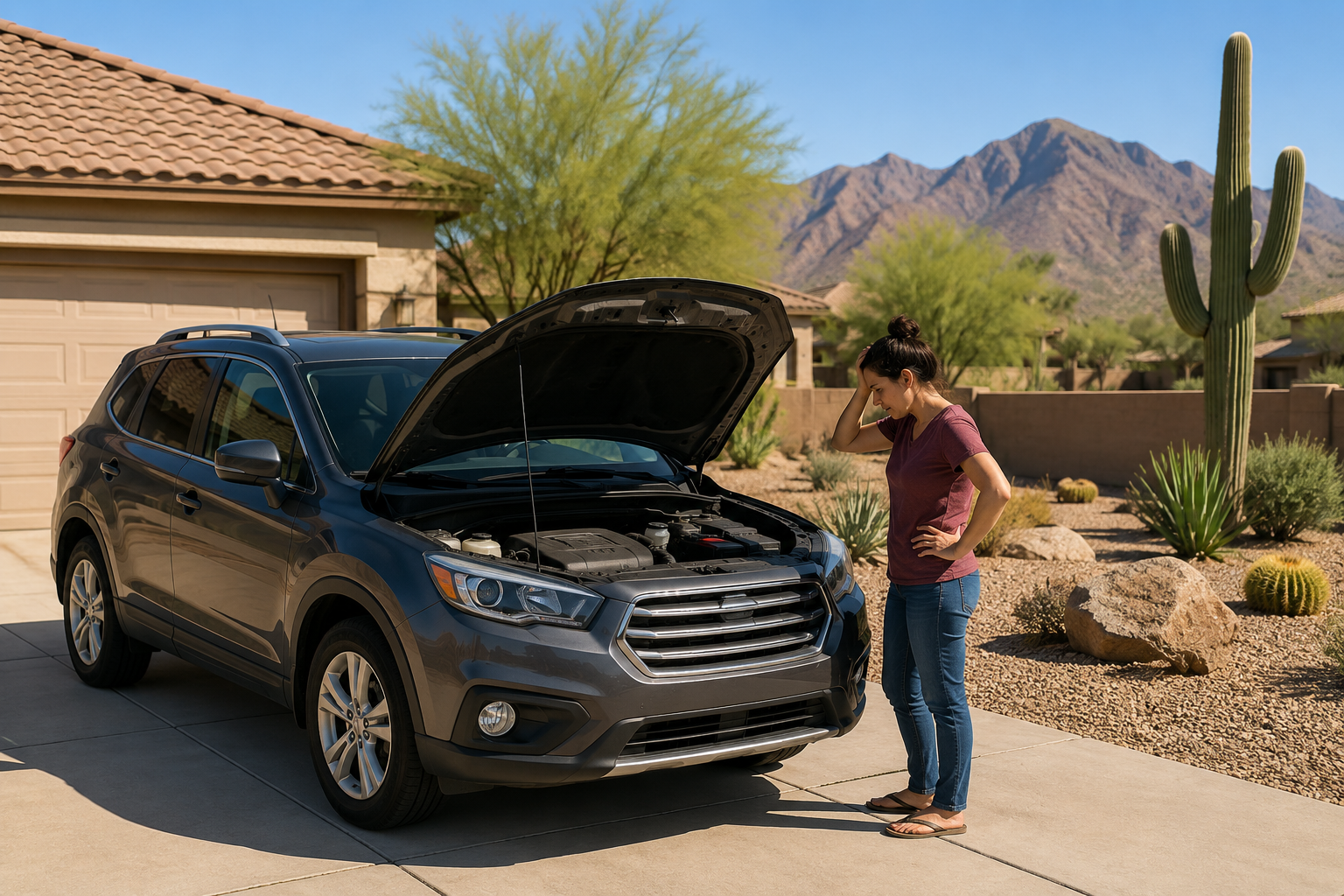
Arizona Fact
Many battery failures occur after a vehicle sits for several days during Arizona’s hottest months. A battery may seem perfectly healthy when you park it, but extreme heat combined with normal electrical drain can leave it unable to start the engine.
A healthy battery can usually recover after sitting for a few days. A battery that’s already been weakened by Arizona’s extreme heat often can’t.
If your battery is more than three years old, having it tested before it leaves you stranded can save you time, money, and frustration.
Warning Signs Your Battery Is About to Fail
Arizona’s extreme heat can weaken a battery long before it completely fails. If you notice any of these warning signs, having your battery tested now could save you from being stranded later.
Slow Engine Crank
Your engine turns over more slowly than normal, especially during the first start of the day.
Battery Warning Light
Your dashboard battery light may indicate a charging system problem or a failing battery that should be tested before it leaves you stranded.
Dim Headlights
Dim headlights, slow power windows, and other electrical issues can all be early signs that your battery or charging system needs attention.
Corroded Battery Terminals
White or blue corrosion around the battery terminals can reduce electrical flow and make starting your vehicle difficult. Cleaning the terminals may help, but corrosion often indicates an aging battery.
Clicking When You Turn the Key
If you hear rapid clicking or a single click when trying to start your vehicle, your battery may not have enough power to crank the engine.
Battery Older Than 3 Years
Arizona’s extreme heat shortens battery life. If your battery is over three years old, having it tested before it fails can help prevent an unexpected breakdown.
Don't Get Stranded in the Arizona Heat
Arizona’s extreme heat can turn a weak battery into a no-start without warning. If you’re noticing any of these warning signs, Desert Battery Rescue will come to your location, professionally test your battery and charging system, and replace your battery on-site if needed. If your vehicle will not start, learn what to expect from our mobile jump-start and dead-battery service in Tucson.
Professional Battery Testing
Quality Battery Options
Most Vehicles Serviced the Same Day
Mobile Service at Your Location
Professional Installation
Warranty Support
Need Battery Service Today?
Frequently Asked Questions About Car Batteries in Arizona
Still have questions? Here are answers to some of the most common questions we receive about battery replacement, battery life in Arizona, warranties, and our mobile service.
How long does a car battery last in Arizona?
Most car batteries in Arizona last between 2 and 3 years. Arizona’s extreme summer heat accelerates chemical reactions inside the battery, causing water loss, sulfation, and internal damage long before the battery actually fails. Having your battery tested annually after its second summer can help prevent an unexpected breakdown.
What are the warning signs of a bad car battery?
Slow engine cranking, dim headlights, clicking when you turn the key, dashboard battery warnings, or electrical issues are all common signs of a weak battery. If your battery is more than three years old, annual testing is recommended.
Can you replace my battery at my home or work?
Yes. Desert Battery Rescue provides mobile battery testing, delivery, and professional installation at homes, workplaces, parking lots, and roadside locations throughout the Tucson area. We bring everything needed to complete the job on-site.
How much does mobile battery replacement cost?
What makes Desert Battery Rescue different?
Do you test my charging system too?
Absolutely. Before recommending a battery replacement, we perform professional battery and charging system testing. This helps determine whether the battery, alternator, or another electrical issue is causing the problem so you only replace a battery when it’s actually needed.
What areas around Tucson do you serve?
We proudly serve Tucson, Marana, Oro Valley, Sahuarita, Vail, Green Valley, and many surrounding communities. If you’re unsure whether you’re in our service area, just give us a call and we’ll be happy to help.
Can you help with a battery warranty?
Do you replace AGM batteries and auxiliary batteries?
Yes. We replace standard flooded batteries, AGM batteries, and many auxiliary batteries found in modern vehicles, including Dodge, Chrysler, Jeep, Ram, BMW, and other start-stop equipped vehicles.
Do I need an appointment?
No appointment is required. Simply call 520-756-5723, and we’ll let you know our current availability. Same-day mobile battery service is often available throughout Tucson and the surrounding areas.
Don't Wait Until Your Battery Leaves You Stranded
Whether you’re at home, work, or stranded on the roadside, Desert Battery Rescue provides professional battery and charging-system testing, quality replacement options, expert installation, and fast mobile service throughout Tucson and surrounding communities.