Why Does My Jeep, Dodge, Chrysler or Ram Have Two Batteries?
If your vehicle is equipped with Auto Start-Stop technology, it may have both a primary battery and a hidden auxiliary battery. These two batteries work together to keep your vehicle running—but when one begins to fail, it can trigger warning lights, starting problems, and even shorten the life of the other battery.
Learn how your dual battery system works, common signs of failure, and why replacing both batteries at the same time is often the smartest long-term solution.
Understanding Your Vehicle's Dual Battery System
Many modern Chrysler, Dodge, Jeep, and Ram vehicles include a second battery hidden inside the vehicle. Most owners don’t realize it’s there until warning lights appear or their vehicle suddenly won’t start.
This guide explains why these vehicles have an auxiliary battery, what it does, common symptoms of failure, and why replacing both batteries at the same time is often recommended.
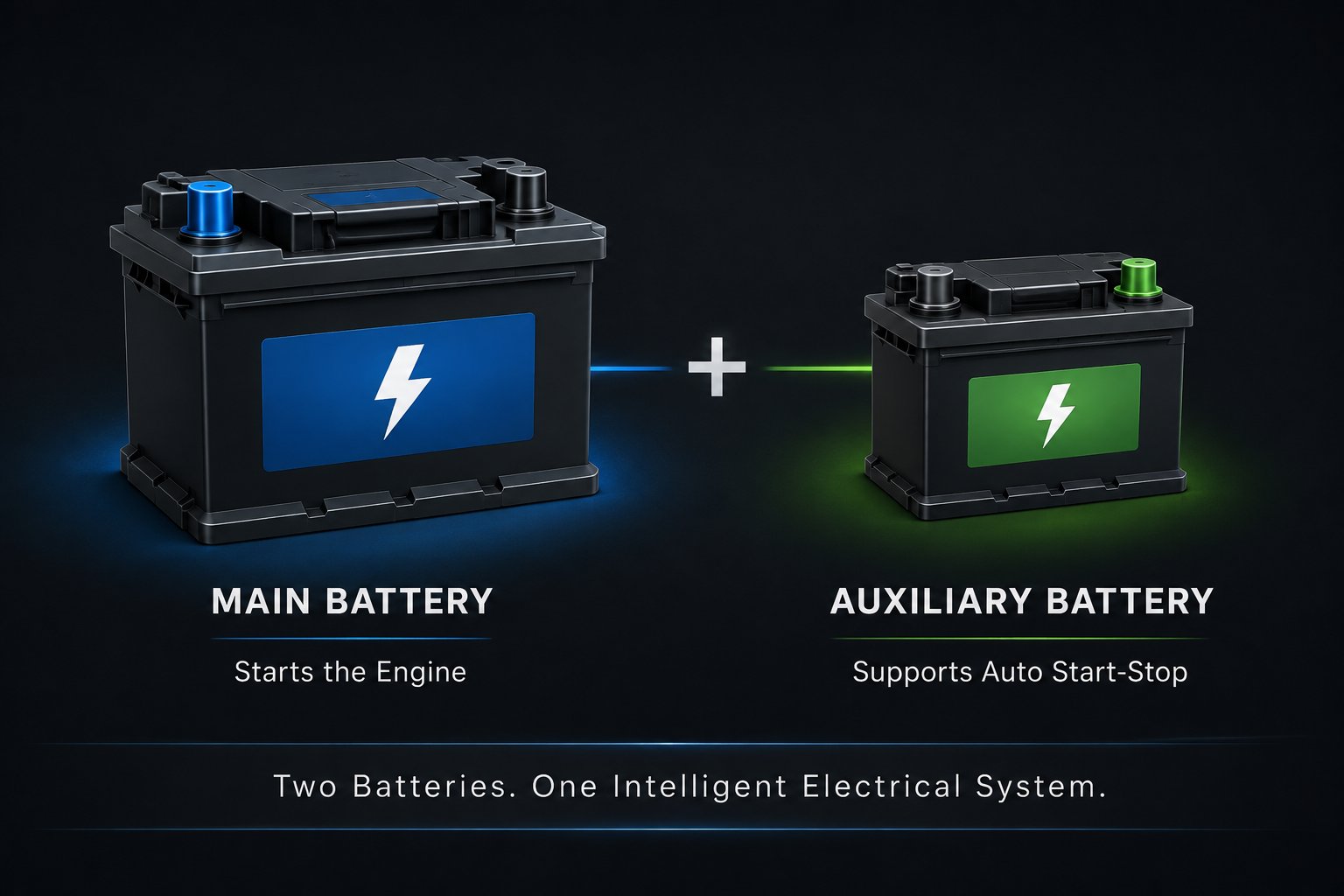
What Is an Auxiliary Battery?
Many Jeep, Dodge, Chrysler, and Ram vehicles equipped with Auto Start-Stop technology use two batteries instead of one.
The main battery provides the power needed to start the engine and operate your vehicle under normal driving conditions. The auxiliary battery is a smaller battery that supports the electrical system during Auto Start-Stop operation, keeping important electronics powered while the engine is temporarily shut off.
Although it’s much smaller than the main battery, the auxiliary battery plays a critical role. When it begins to fail, it can trigger warning lights, disable the Auto Start-Stop system, create electrical problems, and even shorten the life of the main battery.
Why Did Chrysler Add a Second Battery?
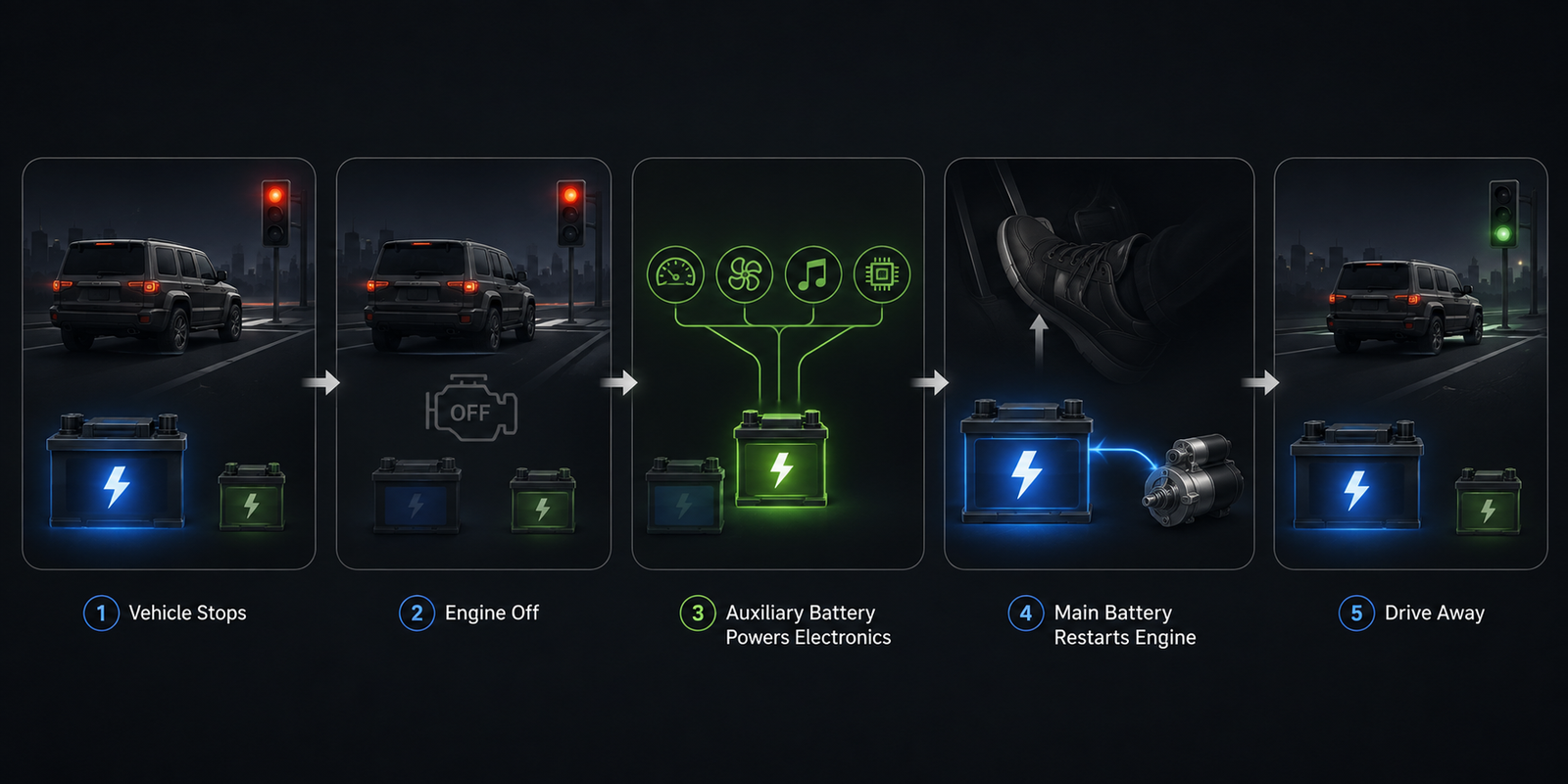
Auto Start-Stop technology was designed to reduce fuel consumption and emissions by automatically shutting the engine off whenever your vehicle comes to a complete stop, such as at a traffic light. The moment you release the brake pedal, the engine restarts almost instantly.
If the engine shuts off, the alternator also stops producing electricity. Without a second battery, important systems like the radio, climate control, dashboard displays, power steering, safety systems, and vehicle computers would briefly lose power.
The auxiliary battery keeps those systems running while the engine is off, allowing the main battery to focus on restarting the engine quickly and reliably.
Signs Your Auxiliary Battery Is Failing
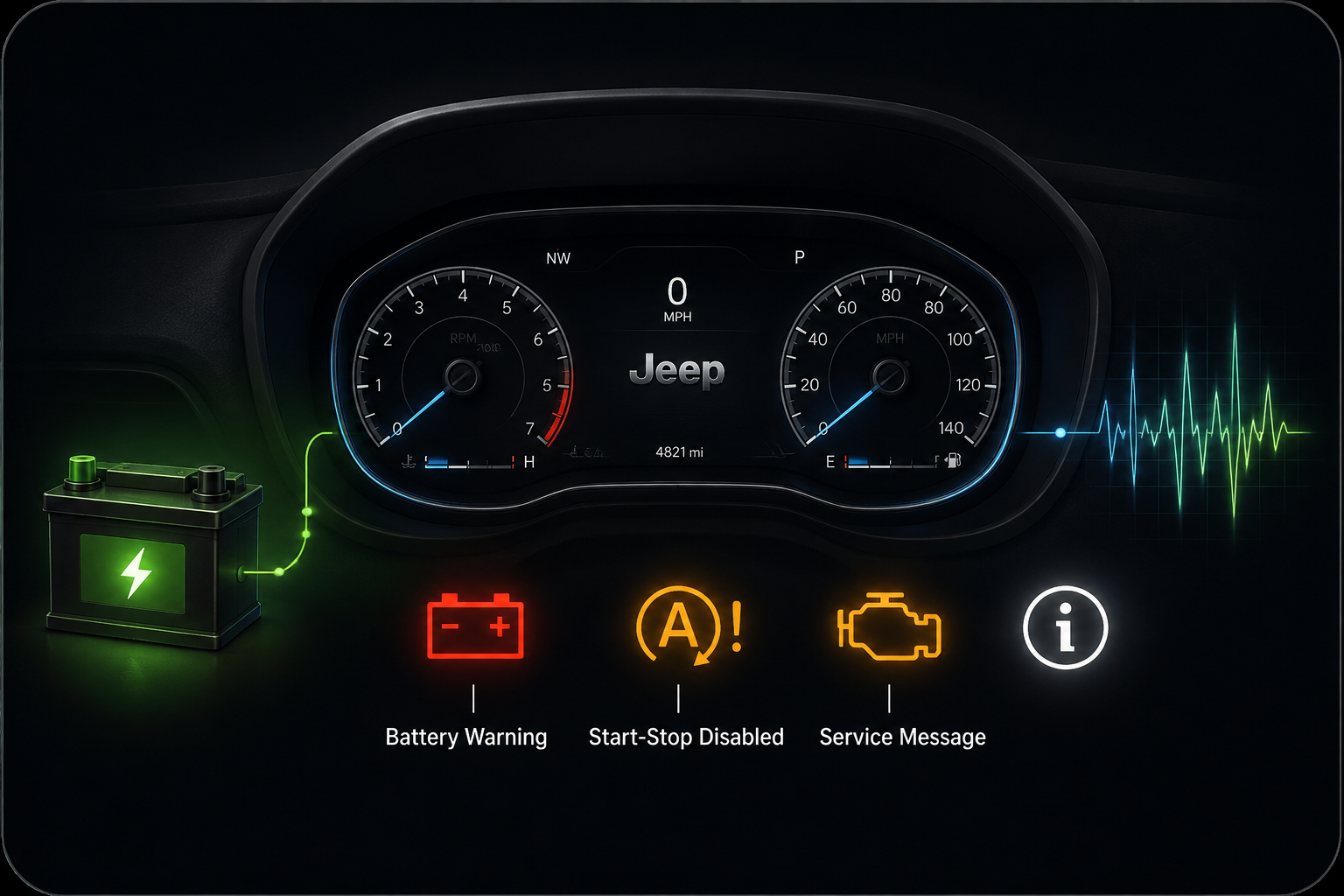
A failing auxiliary battery often gives subtle warning signs before it fails completely. Because it works behind the scenes, many drivers don’t realize it’s the source of the problem until warning messages begin appearing or the main battery is affected.
If you notice any of the following symptoms, it’s a good idea to have both batteries professionally tested before replacing parts unnecessarily.
Symptom List
- Auto Start-Stop unavailable
- Battery warning light
- Service Start-Stop System message
- Slow engine cranking
- Dead main battery
- Electrical issues
- Random warning lights
How the Main Battery and Auxiliary Battery Work Together
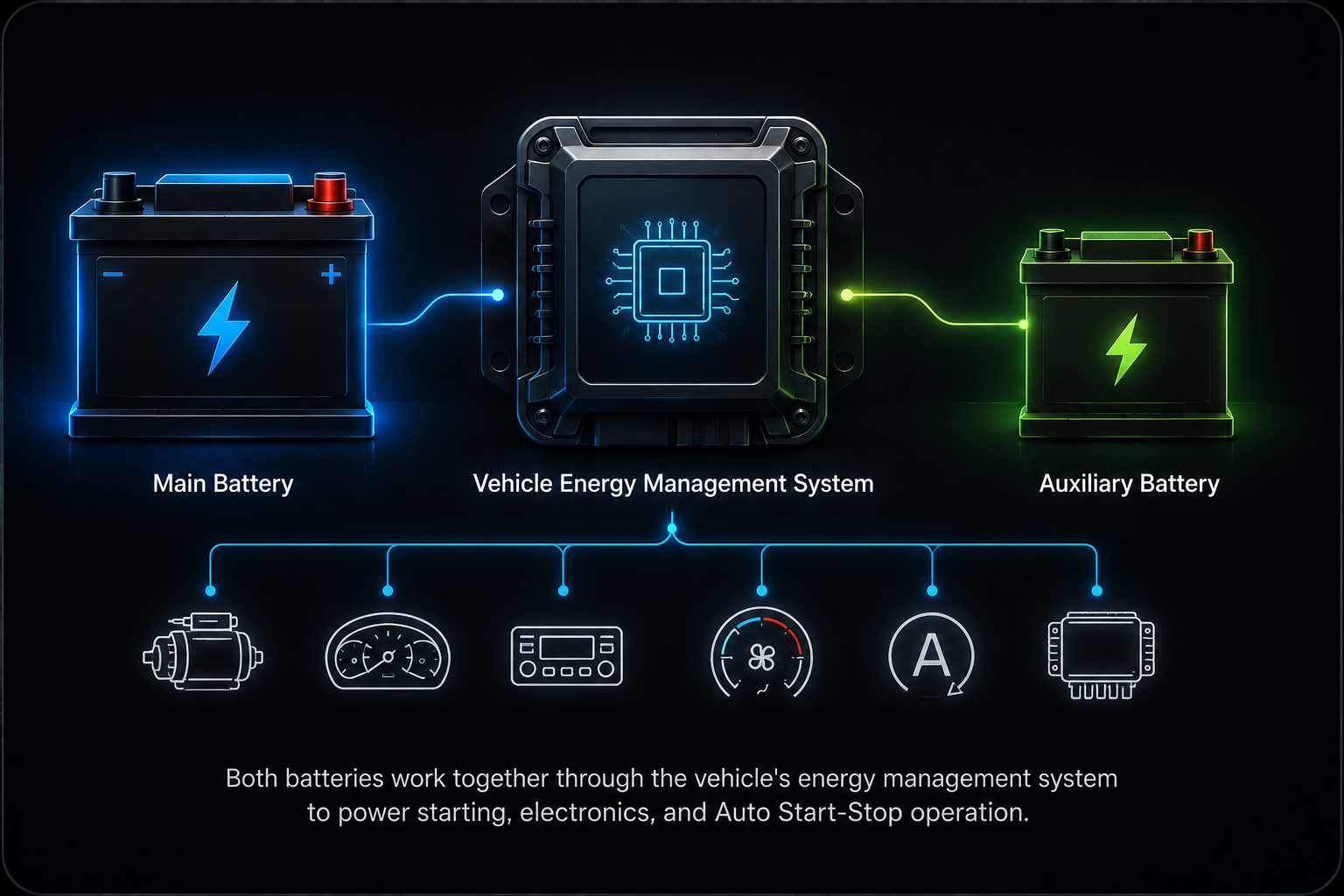
The main battery and auxiliary battery are connected through your vehicle’s Energy Management System, which constantly monitors battery health and distributes power where it’s needed. While the main battery provides the high current required to start the engine, the auxiliary battery helps keep important electronics operating during Auto Start-Stop events and supports the electrical system when the engine is temporarily off.
Because these batteries function as one coordinated system, a problem with either battery can affect the performance of the other. That’s why warning lights, Auto Start-Stop issues, and repeated battery failures often require testing both batteries rather than replacing only one.
Why Replacing Both Batteries Often Makes Sense
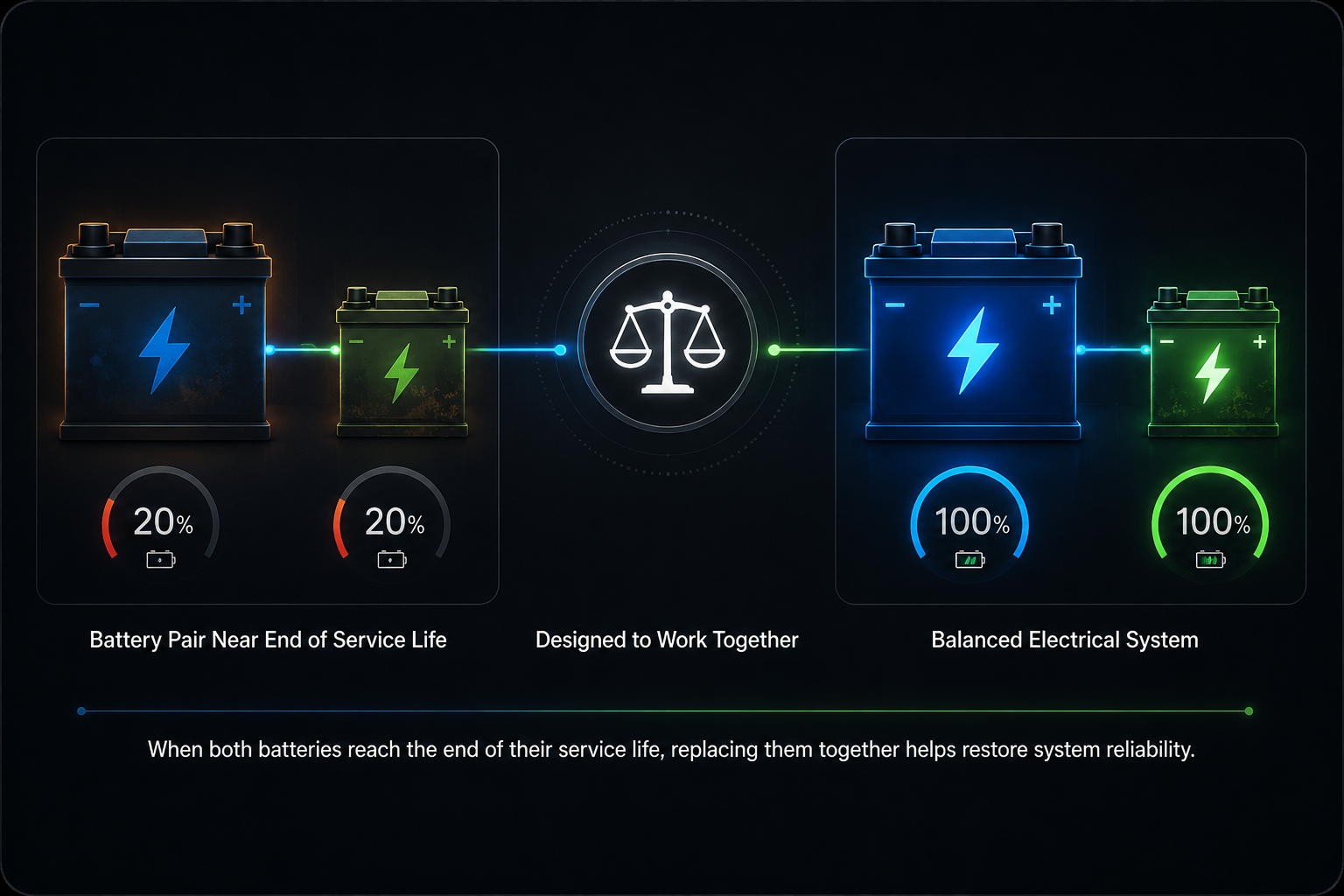
Because the main battery and auxiliary battery work together, they usually age together. As one battery begins to weaken, the other is forced to work harder to keep the vehicle’s electrical system operating properly.
Replacing only one battery may temporarily solve the problem, but an older companion battery can continue placing additional strain on the new one. This can lead to repeated warning lights, reduced battery life, and another service visit sooner than expected.
When testing shows that both batteries are nearing the end of their service life, replacing them together is often the most reliable and cost-effective long-term solution. However, if one battery still tests healthy, it may not need replacement. Professional battery testing helps determine the right repair for your vehicle.
- ✔ Balanced charging
- ✔ Longer battery life
- ✔ Better reliability
- ✔ Fewer electrical problems
- ✔ Reduced chance of repeat repairs
Which Jeep, Dodge, Chrysler & Ram Vehicles Have an Auxiliary Battery?
Many modern Jeep, Dodge, Chrysler, and Ram vehicles equipped with Auto Start-Stop technology use a secondary 12-volt auxiliary battery. However, not every model year or trim level includes one. The chart below lists many of the most common vehicles equipped with a conventional auxiliary battery system.
Manufacturer
Popular Models
Jeep
Wrangler JL • Gladiator • Grand Cherokee • Cherokee • Compass • Renegade
Dodge
Charger • Challenger • Durango • Hornet
Chrysler
Pacifica • 300
Ram
1500 (non-eTorque Start-Stop models) • ProMaster (certain years)
Important: eTorque Hybrid Vehicles
Not all Auto Start-Stop systems are the same.
Some Ram, Jeep, Dodge, and Chrysler vehicles are equipped with eTorque, a 48-volt mild hybrid system. Unlike conventional Auto Start-Stop vehicles that use a small 12-volt auxiliary battery, eTorque vehicles use a high-voltage lithium-ion battery pack and a belt-driven motor generator.
Desert Battery Rescue currently services standard 12-volt dual-battery systems only. We do not service eTorque hybrid systems.
If you’re unsure which system your vehicle has, we’re happy to help identify it before scheduling service.
Frequently Asked Questions
Why does my vehicle have two batteries?
Many Jeep, Dodge, Chrysler, and Ram vehicles equipped with Auto Start-Stop technology use two batteries because each serves a different purpose. The main battery provides the power needed to start the engine, while the auxiliary battery keeps important electrical systems running whenever the engine automatically shuts off at a stop.
Without the auxiliary battery, systems like the dashboard, radio, climate controls, and vehicle computer could briefly lose power during every Auto Start-Stop event. Together, both batteries create a balanced electrical system that improves efficiency while maintaining driver comfort and vehicle reliability.
Can I replace only the auxiliary battery?
In some situations, yes—but it isn’t always the best solution.
Because the main battery and auxiliary battery age together, replacing only the auxiliary battery may leave an older main battery supporting a brand-new companion battery. This imbalance can sometimes lead to repeated warning lights, reduced battery life, or additional electrical issues.
Professional battery testing can determine the condition of both batteries. If both batteries are nearing the end of their service life, replacing them together is often the most reliable long-term repair. However, if one battery still tests healthy, replacing only the failed battery may be appropriate.
Can a bad auxiliary battery drain the main battery?
Yes.
A weak or failing auxiliary battery can place additional strain on the vehicle’s electrical system. Because the batteries work together through the Energy Management System, the main battery may be forced to compensate for the auxiliary battery’s reduced performance.
Over time, this extra workload can shorten the life of the main battery and contribute to warning lights, Auto Start-Stop problems, slow engine cranking, or repeated battery failures. If your vehicle has one battery that has already failed, it’s a good idea to have both batteries professionally tested.
Where is the auxiliary battery located?
Unlike the main battery, the auxiliary battery is often hidden beneath the passenger seat, behind a wheel liner, inside the engine compartment, under the center console, or in another protected location. Many owners don’t realize their vehicle even has a second battery until warning lights appear or battery service is needed.
Because the location varies by make, model, and year, it’s important to identify the correct battery before attempting any repairs.
Do I need battery registration?
Some vehicles require battery registration after a new battery is installed, while others do not.
Battery registration allows the vehicle’s computer to recognize the new battery and adjust its charging strategy. Without registration, some vehicles may continue charging as though the old battery were still installed, which can reduce battery life or cause warning messages.
Many late-model BMWs require battery registration, while some Jeep, Dodge, Chrysler, and Ram vehicles may require a Battery Management System (BMS) reset depending on the model and year. We verify these requirements during service and perform battery registration whenever it is required.
How long do auxiliary batteries last?
Most auxiliary batteries last approximately 3 to 5 years, although Arizona’s extreme heat can shorten battery life.
Unlike the main battery, the auxiliary battery experiences frequent charging and discharging during every Auto Start-Stop cycle. High temperatures accelerate battery wear and can cause the auxiliary battery to fail before the main battery.
If your vehicle is showing Auto Start-Stop warnings, battery messages, or electrical problems, having both batteries tested is the best way to determine whether replacement is needed before you’re left stranded.
Can I drive with a bad auxiliary battery?
In many cases, yes—but it’s not recommended to ignore the problem.
A failing auxiliary battery usually won’t leave you stranded immediately, but it can cause the Auto Start-Stop system to stop working, trigger warning lights, and place additional strain on the main battery. As the problem worsens, you may experience slow engine cranking, electrical issues, or eventually a vehicle that won’t start.
Because the main battery and auxiliary battery work together through the vehicle’s Energy Management System, a problem with one battery can affect the performance of the other. The best approach is to have both batteries professionally tested as soon as warning messages appear. Early testing can help identify the failing battery and may prevent additional repairs later.
Proudly serving Tucson, Marana, Oro Valley, Sahuarita, Vail, Green Valley, and surrounding communities.
Need Auxiliary Battery Service?
If your vehicle is showing start-stop warnings or repeated battery issues, learn about our mobile Auxiliary Battery Replacement service in Tucson and the testing we perform before recommending replacement.